How to Choose a Dental Materials Supplier | ATBIO
Choosing a dental materials supplier is a risk-control decision as much as a purchasing decision. A certificate, attractive sample, or low unit price can open the evaluation, but none proves that the supplier can maintain compliant documentation, consistent batches, controlled changes, dependable replenishment, and effective complaint handling.
The right process starts with the destination market and intended product, defines hard-fail requirements, verifies evidence at its source, tests the real workflow, and records the decision. This guide gives distributors, private-label brands, and clinic groups a repeatable supplier-selection method.
01 — Define the Requirement Before Comparing Suppliers
Write a requirement profile before sending requests for quotation. Include target countries, product families, intended users and uses, registration strategy, annual demand range, packaging, languages, private-label needs, storage, delivery model, and required launch date. Separate mandatory criteria from preferences.
A supplier suitable for a domestic clinic order may not be suitable for a regulated private-label launch. Likewise, a manufacturer with a broad catalogue may be weaker than a focused manufacturer in the product category that matters to you. Compare suppliers against the same documented requirement rather than against one another’s marketing claims.
02 — Use a Weighted 10-Point Scorecard
| Criterion | Evidence to verify | Typical hard fail |
|---|---|---|
| 1. Market authorization fit | Device status, classification, route, registration holder, and destination scope | Supplier treats CE or ISO 13485 as worldwide sales permission |
| 2. Quality-system scope | Issuer, certificate status, sites, activities, and product categories | Expired, unverifiable, altered, or out-of-scope certificate |
| 3. Product evidence | Specifications, IFU, risk and biological evidence, stability, performance, and claims | Documents describe a different formulation, name, site, or intended use |
| 4. Manufacturing control | Actual site, process flow, validation, environmental needs, equipment, and capacity | Quoted legal manufacturer cannot identify or control production |
| 5. Batch release and traceability | Raw materials, batch record, acceptance criteria, test results, labels, and retention samples | No reliable link from finished unit back to production and release records |
| 6. Change control | Notice duties for formulation, raw material, site, process, test, packaging, and label changes | Supplier can change regulated attributes without prior assessment |
| 7. Complaint and field action | Intake, investigation, vigilance, CAPA, response, recall, and communication process | No documented escalation or batch-level investigation capability |
| 8. Commercial fit | MOQ, price tiers, tooling, artwork, payment, exclusivity, forecast, and termination terms | Critical terms remain verbal or change after deposit |
| 9. Supply resilience | Lead time, capacity, critical sources, shelf life, storage, export documents, and continuity plan | No credible recovery plan for a critical interruption |
| 10. Technical support | Named contacts, response path, training, approved content, samples, and language capability | Sales team answers technical questions by inventing unsupported claims |
Treat these as ten evaluation criteria, not a validated scoring instrument. Set weights and acceptance gates before reviewing quotations. Technical validation asks whether the exact material performs its intended function; QMS assessment asks how the organization controls that product over time; market-access review asks whether the identified device and operators meet destination requirements. None substitutes for the others. Regulatory fit, product identity, traceability and complaint capability must not be averaged away by a low price. Record the evidence, reviewer, date, unresolved gaps, decision and next review.
03 — Verify Certificates and Identities at the Source
Certificate verification is a pass/fail gate inside supplier selection, not a second factory-audit course. Confirm the legal name, site, issuer, number, validity and scope at the issuing source; then connect the evidence to the exact product and destination-market route. ISO itself does not certify organizations, and ISO 13485 does not authorize a product for every market.
Record the result in the scorecard and escalate inconsistencies. If the supplier passes this desktop gate, use the risk-based dental factory audit checklist to test records and operations. This article remains responsible for the comparative decision; the audit article owns the detailed inspection method.
04 — Examine the Technical File and Change Controls
Request a controlled document sample for a priority SKU before debating the entire catalogue. Compare the product name, models, composition, intended purpose, manufacturer, site, shelf life, storage, label, IFU, specifications, and test reports. Inconsistencies are more informative than a polished cover page.
Which specifications are release criteria, and which are descriptive marketing data?
Which test methods, sampling plans, and acceptance limits are used for every batch?
How are stability claims supported, and does the shipping configuration match the validated pack?
Which raw materials, processes, software, packaging, and suppliers are critical?
Which changes require your prior notice or regulatory approval before supply?
Can the supplier investigate a complaint using the returned sample, lot records, and retention sample?
GHTF supplier-control guidance links the extent of purchasing controls to the effect of a purchased product or service on the finished device. Apply that risk-based approach to a practical traceability exercise: select a released lot, reconcile its label and release record with the invoice and packing list, then identify the customers who received it. Record missing links and require corrective action before approval; a traceability policy alone does not demonstrate that records can be retrieved.
05 — Test Samples With a Written Protocol
A free sample is not evidence until it is identified, handled, and assessed systematically. Record the lot, expiry, shipping conditions, IFU version, accessories, comparison material, users, cases or bench methods, acceptance criteria, observations, and complaints. Clinical use must remain lawful, ethical, within intended use, and under qualified professional judgment.
After the sample stage, use a controlled pilot order to test artwork approval, order confirmation, production lead time, batch documents, packing, freight, customs, receipt, stock rotation, training, and initial reorders. Do not grant broad exclusivity because a single sample handled well.
06 — Compare Total Landed Risk, Not Unit Price
Build a cost model that includes product, primary and secondary packaging, mixing tips or accessories, artwork and translation, registration, testing, audits, freight, insurance, duty and tax, customs services, payment fees, inspection, samples, training, expiry, complaints, remakes, and working capital.
Confirm Incoterms, title and risk transfer, production and transit lead times, minimum remaining shelf life, storage conditions, shipment release documents, partial deliveries, nonconforming goods, currency, payment milestones, and force-majeure treatment in writing. A delivery promise is incomplete if it excludes production, document approval, customs or assessment of a temperature-sensitive route. Agree which invoice, packing list, origin documents and market-specific certificates accompany each shipment; do not assume every document is required in every country.
07 — Put Quality Responsibilities in the Agreement
A purchase contract sets commercial terms; a quality agreement allocates operational tasks without overriding statutory duties. Cover specifications, approved sites and subcontractors, audits, deviations, release, traceability, retention samples, changes, record retention and termination handover. For complaints, specify the receiving contact, required lot and incident information, immediate stock-hold assessment, investigation owner, reporting route and applicable deadlines. Require documented corrective and preventive action (CAPA), an effectiveness check and cooperation in field actions or recalls; replacing a syringe alone does not close a safety investigation.
Before an audit, use the dental factory audit checklist to convert claims into observations and records. Businesses building a new route to market can also review how to become a dental distributor.
08 — Red Flags That Require Escalation
Certificate numbers, issuer details, sites, or scopes cannot be independently verified.
Product names or manufacturer addresses conflict across label, IFU, declaration, certificate, and invoice.
Samples have no lot or expiry, or commercial goods may differ from tested samples without notification.
The supplier refuses to identify the actual production site or critical subcontracted processes.
Performance, biocompatibility, stability, or clinical claims are supplied only as marketing slides.
Prices far below alternatives are paired with short dating, vague origin, or incomplete documentation.
Third-party payments, altered invoices, misdeclared values, or hidden destinations are proposed.
Pressure for immediate exclusivity or deposit replaces answers to reasonable quality questions.
A red flag does not always prove misconduct, but it changes the evidence and approval required. Pause rather than rationalize a hard-fail issue.
09 — Frequently Asked Questions
1. Does ISO 13485 certification prove every product is compliant?
No. It concerns the organization’s quality management system within a defined scope. Product authorization, technical evidence, classification, labeling, and market requirements must still be verified separately.
2. Is a manufacturer always better than a trading company?
Not automatically. The key is role transparency and control. A competent distributor or specification developer can add value, while a factory can still have weak documentation. Verify who controls design, production, release, regulatory duties, and complaints.
3. How many samples are enough to approve a dental material?
There is no universal number. Sampling should be risk-based and use predefined criteria, representative lots and users, lawful intended-use evaluation, and enough evidence to address the critical performance questions.
4. Should price be included in a quality scorecard?
Include total commercial value, but keep hard quality and regulatory gates separate. A low price cannot offset an unverifiable authorization, broken traceability, or inability to investigate complaints.
5. When should exclusivity be discussed?
After role, authorization, supply, support, and market capability are evidenced. Use staged, measurable conditions for territory, minimum performance, launch investment, payment, compliance, and review or termination.
10 — References
International Organization for Standardization. ISO 13485:2016 — Medical devices — Quality management systems — Requirements for regulatory purposes. Official standard page.
European Commission. Notified bodies for medical devices and the NANDO information system. Official guidance.
International Medical Device Regulators Forum / GHTF. Guidance on the Control of Products and Services Obtained from Suppliers. GHTF/SG3/N17:2008. Official guidance document.
International Organization for Standardization. Certification: ISO develops standards but does not issue certificates. https://www.iso.org/certification.html.
European Union. Regulation (EU) 2017/745 on medical devices: economic-operator obligations and traceability. https://eur-lex.europa.eu/eli/reg/2017/745/oj.
11 — About ATBIO
This article is published by ATBIO, the dental-materials brand of AT&M Biomaterials Co., Ltd.
ATBIO (AT&M Biomaterials Co., Ltd.) develops and manufactures professional dental materials across restorative, adhesive, cement, etchant, impression, and related categories. Buyers should verify the current product, market, certificate, specification, and documentation scope for their own project. Learn more about ATBIO or review the distributor cooperation page.
This article provides general educational and procurement information and does not replace a regulatory assessment, supplier audit, quality agreement, legal review, or product-specific clinical judgment. This page does not claim unconditional sale authorization in every country.
12 — Related Products
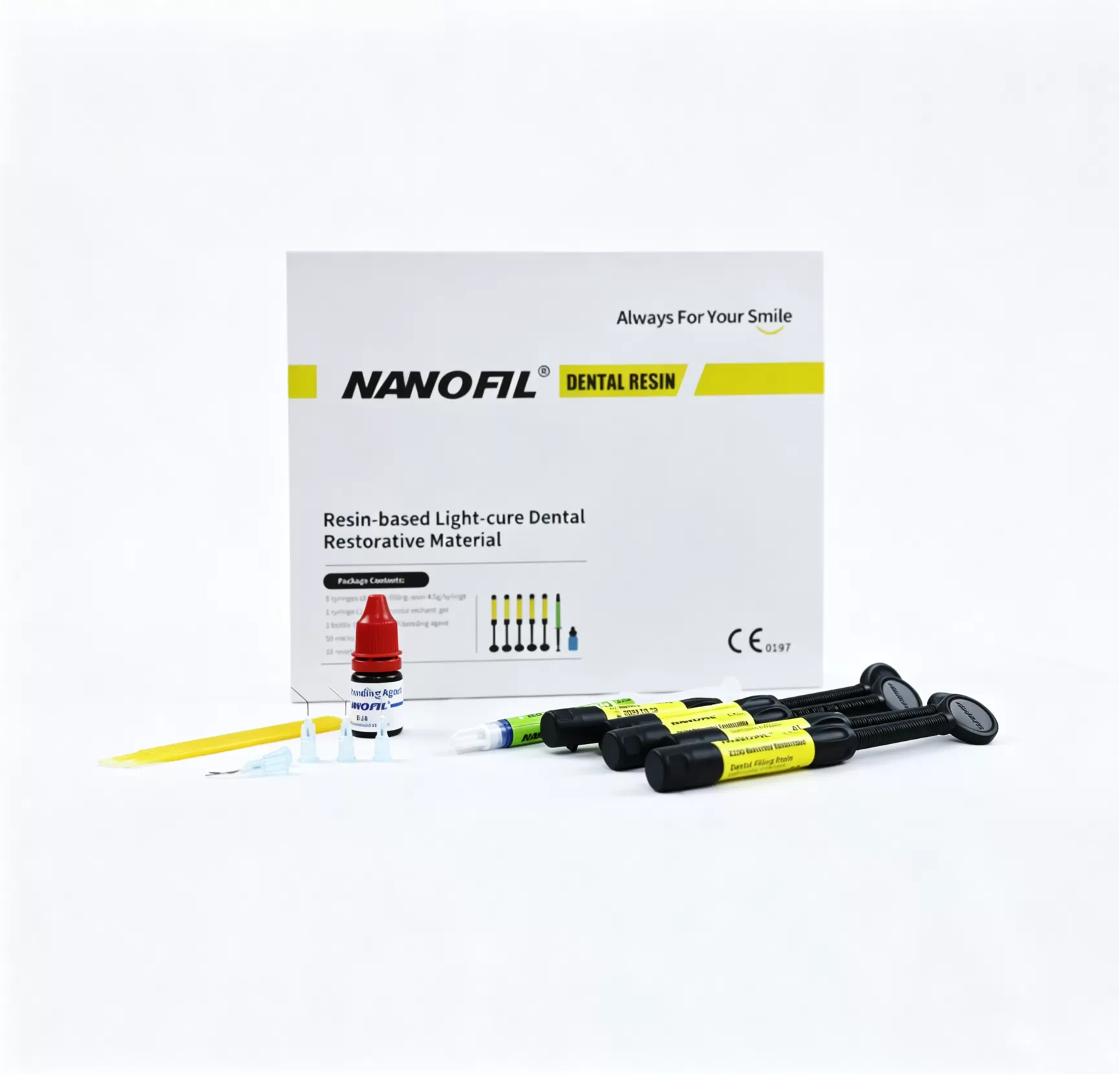
Dental Resin Intro Kit — a compact set for structured product and workflow evaluation before a broader restorative launch.
NANOFIL® Z250 Universal Restorative — a nanohybrid composite whose specifications and intended applications should be checked in current documents.
NANOFIL® Perfect-Link Universal Adhesive — a universal adhesive for professional evaluation under its current IFU and market documentation.
Ready to evaluate a specific ATBIO supply project? Request a quote with your target market, product list, annual demand range, brand model, and required documents.
Do you prefer online learning?
Live webinars and professional tips — learn when, where and how.
Access our online learning opportunities