Dental Composite Price & Wholesale Buying Guide | ATBIO
A useful answer to “What is the dental composite price?” begins with a specification, quantity, destination and delivery term. A syringe price without those details can conceal differences in net mass, shade, presentation, shelf life, regulatory status, freight responsibility and service.
This wholesale buying guide provides a repeatable way to compare composite-resin quotations. It does not publish a universal price list because manufacturer terms, exchange rates, logistics and market requirements change. Instead, it shows clinics, depots and distributors which cost lines to normalize and which evidence to verify before ordering.
01 — Define the Product Before Comparing Price
“Composite” is not one interchangeable product category. Identify the intended clinical category and exact presentation before asking suppliers to compete. Compare only products whose current instructions and market authorization cover the use you need.
universal, anterior, posterior, flowable, bulk-fill or another defined category;
syringe, unit-dose capsule or kit, with net content per unit;
shade system and number of shades included in the quotation;
light-cure or other cure mode and the required curing conditions;
accessories or companion products required by the IFU;
sales unit, inner carton, master carton and order multiple.
Filler processing, resin formulation, batch testing, documentation, packaging and service can all affect a quotation, but a label such as “nanohybrid” does not reveal their relative cost or establish clinical equivalence. A higher-priced brand is not automatically more suitable, and a lower-priced material is not automatically equivalent. Ask for controlled specifications and relevant performance evidence before comparing the commercial offer.
02 — Normalize the Quotation to Comparable Units
Begin with the net content, not the apparent pack count. Convert every offer to the same unit—usually price per gram for like-for-like syringes or price per dose for comparable capsules. For kits, separate the value of composite, adhesive, etchant, applicators and other contents rather than dividing the kit price by an arbitrary number of cases. Do not convert millilitres to grams without product-specific density. Syringes may suit repeated dispensing, while single-dose capsules change dispensing, residual waste and inventory needs; neither format is universally cheaper per completed procedure.
| Quote field | Normalize or verify | Common comparison error |
|---|---|---|
| Unit content | Net g, ml or dose count stated for the exact SKU | Comparing syringe prices with different fill weights |
| Shade mix | Quantity and price by shade, including slow movers | Using a headline MOQ that cannot match local demand |
| Quoted quantity | Per SKU, variant, carton and total purchase order | Assuming every shade receives the same volume discount |
| Validity and currency | Quotation expiry, payment currency and adjustment mechanism | Comparing offers issued under different exchange-rate assumptions |
03 — Separate Product Price From System Cost
A restoration may also require an adhesive, etchant, applicators, finishing materials and a curing light compatible with the relevant IFUs. These do not need to come from one kit, but the buyer must model the complete approved workflow. Do not infer cross-brand compatibility from a sales bundle.
For clinic purchasing, a useful internal metric is usable material cost per procedure based on observed consumption and waste. It is not a universal number: cavity size, technique, presentation and operator practice vary. For distributor purchasing, measure gross contribution after landed cost, expiry, samples, replacements and channel support—not simply the percentage between factory and list price.
04 — Calculate Total Landed Cost
The factory unit price is only one element of landed cost. Build a line-by-line model for freight, insurance, export and import handling, brokerage, duties, taxes, inspection, banking, registration, translation, local warehousing and financing. Distinguish recoverable tax from a true cost according to qualified local advice.
State the selected Incoterms® 2020 rule and named place in the quotation and contract. Incoterms® rules allocate defined tasks, costs and risks between seller and buyer; they do not determine title, payment, product conformity or regulatory responsibility. A lower EXW price cannot be compared directly with a delivered offer until responsibilities are normalized.
05 — Put Shelf Life Into the Price Model
“Shelf life” and “remaining shelf life on receipt” are different. Ask for the supported shelf life, labelled storage conditions, expected production or release timing, and a written minimum remaining life at dispatch or arrival. Do not invent one storage temperature for every composite.
Allocate demand by shade and compare the volume discount with storage, financing and likely expiry exposure. A larger order may reduce purchase or freight cost per unit but tie up more cash and leave slow-moving shades unused. Record receipt conditions and lot age, use first-expiry-first-out rotation where appropriate, and quarantine stock affected by damage or a suspected temperature excursion until an authorized disposition is documented. A discount does not make compromised material usable.
06 — Verify Quality and Regulatory Evidence
ISO 4049:2019 specifies requirements and test methods for polymer-based restorative materials within its scope. Identify the edition cited by the supplier and connect each compliance claim to the exact material and controlled test report; passing a material test is not a clinical outcome guarantee. ISO 13485 concerns the organization's quality-management system. Technical performance, QMS certification and destination-market authorization are separate checks, and none can be inferred from the quoted price.
For every destination market, verify the legal manufacturer, intended purpose, classification, declaration, certificate or registration where applicable, label, IFU language and economic operators. CE marking, when applicable, does not grant unconditional permission to sell in every country.
Use the dental supplier selection guide to review certificate scope, batch release, change control, complaints and traceability before letting a small price difference drive the decision.
07 — Choose the Right Purchasing Channel
| Channel | Usually fits | Due diligence |
|---|---|---|
| Authorized local channel | Clinics and buyers needing small quantities, local stock and local support | Authorization, lot traceability, storage, expiry and complaint route |
| Dental depot or wholesaler | Multi-clinic or dealer orders across several categories | Source, sales authorization, pack integrity and return terms |
| Direct manufacturer | Qualified importers, distributors and private-label projects with sufficient capability | Importer duties, registration, MOQ, logistics, quality agreement and local support |
Direct purchasing is not automatically cheaper after compliance, inventory and service are included. Choose the channel that matches legal capability, order size, cash cycle and customer-support obligations. The dental distributor guide explains the operating controls needed for direct import and distribution.
08 — Send an RFQ That Produces a Comparable Answer
For each SKU, provide product category, presentation, net content, shades, quantity, destination, requested Incoterms® rule and place, delivery window, market documentation, language, remaining shelf-life requirement and private-label status. Ask the supplier to separate product, packaging customization, documents or legalization, samples, freight and one-time charges.
Also request quotation validity, payment terms, production trigger, lead-time definition, substitution policy, change-notification process, complaint contact and warranty or return conditions. A detailed RFQ reduces assumptions; it does not commit the buyer to order.
09 — Evaluate Samples Before Scaling
Use a controlled evaluation plan and the current IFU. Qualified users can assess dispensing, adaptation, sculptability, shade workflow, curing, finishing and polishing within the authorized use. Record lot, operator, light, protocol and deviations. Do not call distributor feedback a clinical trial or use it to create unsupported claims.
After technical acceptance and confirmation of market requirements, test commercial fit with a small, traceable assortment. Reconcile the manufacturer's release documents, invoice and packing list with received SKUs, quantities, lots and expiry dates; retain customer-dispatch records for any subsequent field action. Monitor paid reorders, shade mix, complaints, returns, stock age and support needs, assigning an owner to investigate recurring problems. Scale from evidence rather than from the largest discount tier.
10 — Compare ATBIO Composite Formats
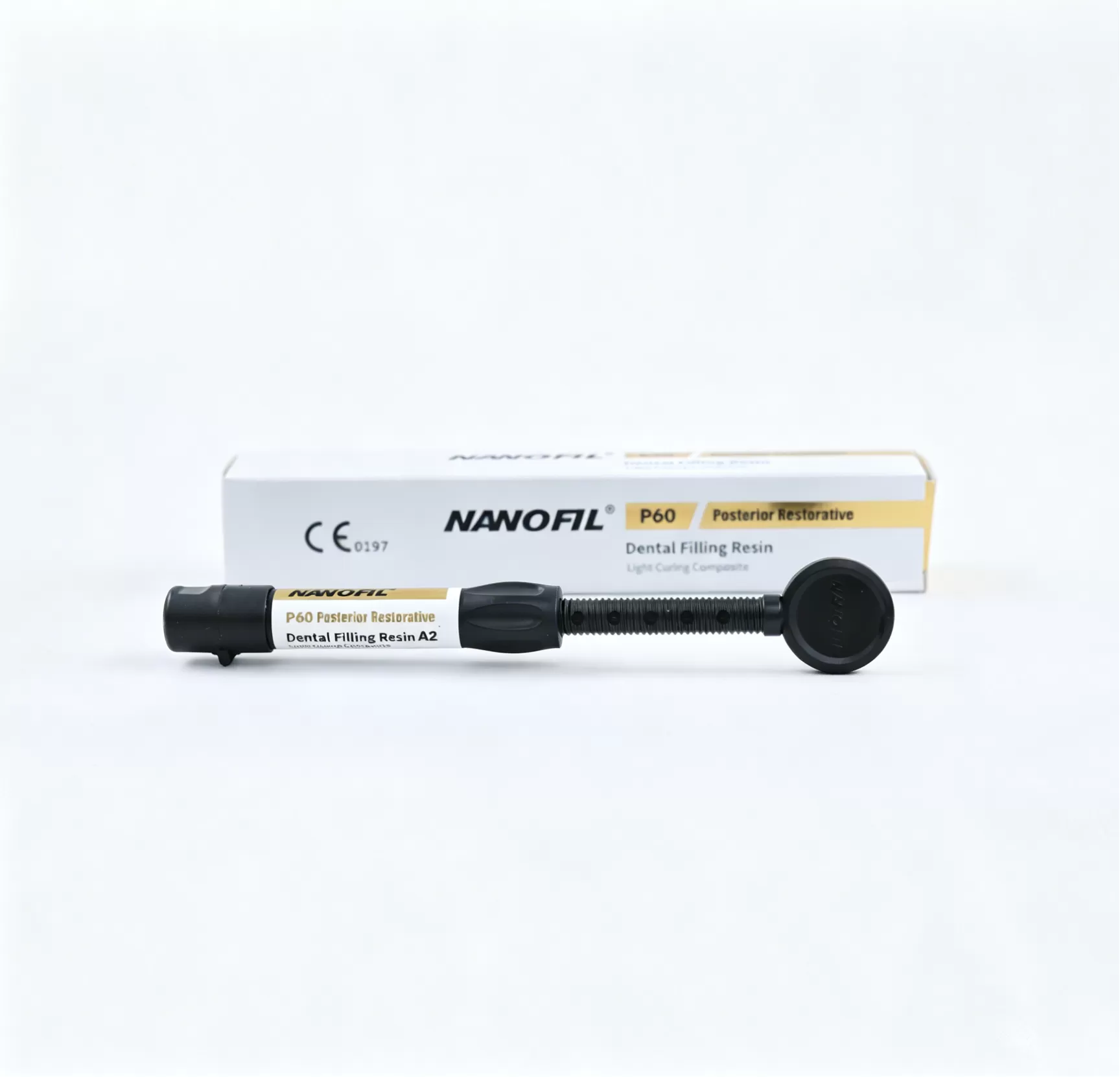
ATBIO's current composite resin portfolio includes universal, posterior, aesthetic, flowable, one-shade and kit presentations. The NANOFIL® Z250 page describes a nanohybrid universal restorative for anterior and posterior use, while the P60 page presents a posterior-focused nanohybrid. The Composite Intro Kit lists resins, bonding agent, etchant and applicators. Confirm the net content and component quantities in the controlled quotation and current documentation rather than relying on a short page summary.
Use the exact current product page and IFU to define the quoted SKU; do not extend one product's shades, pack sizes, indications or performance claims to another. For a line-by-line wholesale quotation, send product, format, shade mix, quantity and destination through request a quote. Distributors seeking a territory discussion can use the partnership page.
11 — Frequently Asked Questions
What is the wholesale price of dental composite resin?
There is no reliable universal price. It depends on exact SKU, content, shades, quantity, currency, delivery term, destination, documentation, packaging and service. Request a dated written quotation.
Should quotes be compared per syringe or per gram?
Use price per gram for genuinely comparable syringe products, while retaining pack, shade and performance context. For capsules, compare the defined dose and unit count. A normalized price never replaces technical qualification.
Is direct factory purchasing always the lowest-cost option?
No. Import compliance, registration, freight, inventory, expiry, financing and local support can outweigh the factory-price difference. Compare total landed and operating cost.
Does ISO 13485 prove that a composite can be sold in my country?
No. It provides evidence about a quality-management system within its certified scope. Product authorization depends on the exact device and market requirements.
What information should I send for an accurate quote?
Send exact product or category, presentation, net content, shade quantities, destination, desired delivery term, market and language requirements, private-label needs and target delivery window.
12 — References
International Organization for Standardization. ISO 4049:2019 — Dentistry — Polymer-based restorative materials.
International Organization for Standardization. ISO 13485:2016 — Medical devices — Quality management systems.
International Chamber of Commerce. Incoterms® 2020.
ATBIO. Dental composite resin portfolio.
13 — About the Manufacturer
This article is published by ATBIO, the dental-materials brand of AT&M Biomaterials Co., Ltd.
ATBIO is the dental-materials brand of AT&M Biomaterials Co., Ltd. Its official site lists composite resins, adhesives, cements, impression materials and other dental categories. Availability, product evidence, pricing, MOQ, delivery and market documentation depend on the exact request. This page does not claim unconditional sale authorization in every country.
This article provides general procurement and commercial information, not clinical, tax, customs, legal or regulatory advice. Verify current product instructions and destination-market requirements with qualified professionals.
14 — Related Products and Resources
Do you prefer online learning?
Live webinars and professional tips — learn when, where and how.
Access our online learning opportunities