How Long Does Composite Bonding Last? | ATBIO
One of the first questions patients ask before committing to cosmetic treatment is simple: how long does composite bonding last? There is no single reliable expiry date: a restoration may remain in service for years while still needing polishing or a localized repair. Longevity varies with the tooth involved, restoration size and location, bite forces, patient habits, maintenance, material selection, and the quality of the adhesive and light-curing technique.
The encouraging point for patients and clinics is that many of these variables can be managed. Composite bonding usually ages gradually rather than failing at one predictable moment, and localized defects may often be polished or repaired instead of requiring immediate full replacement. This guide explains what influences composite bonding lifespan, how to extend it, which warning signs deserve attention, and how clinicians decide between repair and replacement.
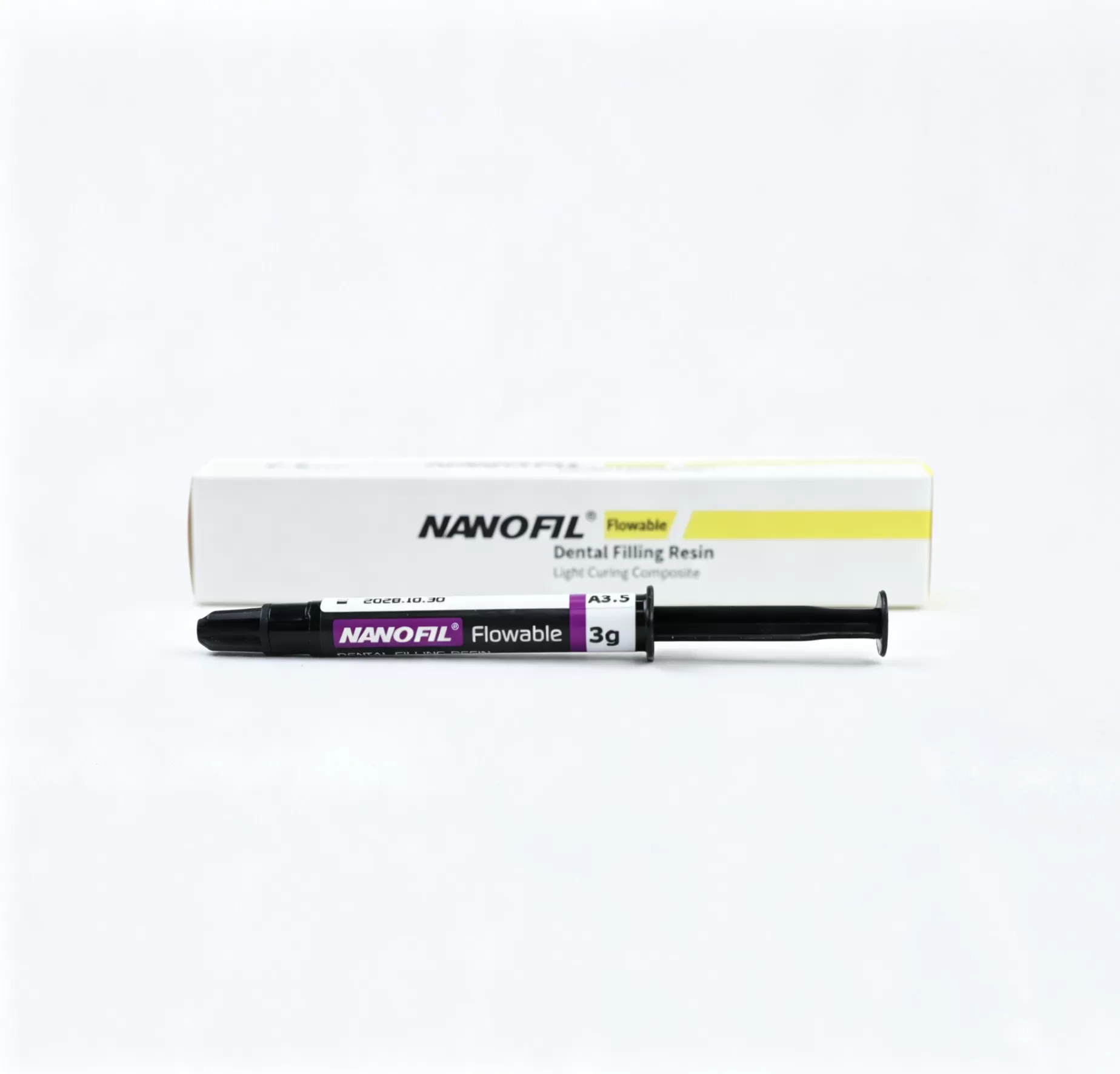
NANOFIL® flowable composite is shown here as a restorative material, not as evidence of a particular lifespan or a recommendation for every incisal repair.
01 — Typical Composite Bonding Lifespan
The useful distinction is between survival and maintenance-free success. A restoration can survive because it remains in place after repair, while a study counting any intervention as failure reports a different outcome. Demarco and colleagues found substantial variation across anterior restoration studies. Aziz and Locke studied localized anterior tooth wear, not all cosmetic bonding. Neither review establishes a universal replacement age or a maintenance-free interval for an individual patient.
It also helps to define what “lasts” means. Composite bonding does not usually fail all at once. Instead, it may age through a gradual sequence:
Acceptable appearance and function: continue home care and risk-based review; age alone does not justify replacing sound bonding.
Surface changes: loss of gloss or superficial staining may call for professional polishing, without removing the whole restoration.
Localized or extensive defects: assess chipping, wear, marginal changes and shade mismatch to decide whether monitoring, repair or replacement is appropriate.
These are clinical states, not successive stages on a timetable: a chip can occur early, and an older restoration can remain serviceable. Because direct composite can often be added to or repaired while preserving sound tooth structure, maintenance may remain conservative. That repairability is one of composite bonding’s practical advantages when compared with treatments that require more extensive tooth preparation.
02 — Six Factors That Affect Composite Bonding Longevity
1. Oral hygiene
Plaque accumulation at restoration margins can contribute to surface staining, gingival inflammation, and caries adjacent to the restoration. Bonded teeth require careful brushing and interdental cleaning, with particular attention to margins that are difficult to clean.
2. Bite forces and parafunctional habits
Bruxism and clenching expose restorations to repeated loads that may contribute to chipping, wear, or fracture. Where clinically indicated, an occlusal guard and correction of unfavorable contacts can improve the maintenance plan, although no appliance can guarantee that a restoration will not fail.
3. Diet and staining exposure
Composite surfaces may pick up pigments over time. Frequent exposure to coffee, tea, red wine, strongly colored foods, or tobacco can accelerate visible staining, particularly after surface gloss has decreased. Following the clinician’s immediate postoperative advice and moderating long-term exposure can help preserve appearance.
4. Habits such as nail biting and ice chewing
Point loads from fingernails, pens, ice, hard candy, or using teeth as tools can chip incisal bonding. Avoiding these behaviors is one of the most direct ways a patient can protect the restoration.
5. Location and size of the restoration
Small additions that are protected from heavy contact generally face a different risk profile from large restorations on canines, incisal edges, or teeth involved in protrusive guidance. Larger bonded areas create more surface and interface exposed to wear and loading, so case design and occlusal assessment matter.
6. Material quality and clinical technique
A suitable restorative composite placed on a clean, appropriately prepared substrate with a compatible adhesive and adequate light curing is more likely to perform predictably than a restoration placed under contaminated or inadequately cured conditions. Isolation, etching or conditioning, adhesive application, increment thickness, curing-light output, finishing, and polishing all contribute. A separate clinical review of bonding failures can further explain these mechanisms, but it should not replace the manufacturer’s instructions for use for each material.
03 — Composite Bonding Care Checklist
Patients who follow a consistent maintenance routine are more likely to protect appearance and identify small defects before they become larger problems:
Brush twice daily with a fluoride toothpaste of suitable abrasivity. Avoid aggressive home polishing and highly abrasive products that may dull the composite; fluoride remains important for protecting adjacent tooth tissue.
Clean between teeth every day. Guide floss gently through contact points rather than forcing it against restoration margins.
Avoid biting hard objects. Fingernails, pens, ice, hard candy, and using teeth as tools can generate damaging point loads.
Moderate staining drinks and foods. Rinsing with water after exposure can reduce the time pigments remain on the surface.
Use an occlusal guard when prescribed. Patients who grind or clench should follow their clinician’s protective-appliance advice.
Attend regular examinations and professional cleaning. Recall visits allow clinicians to evaluate margins, occlusion, surface texture, and caries risk, and to repolish where appropriate.
Return promptly if the restoration feels rough, loose, or chipped. A small localized repair may be more conservative than treating a defect after it progresses.
04 — Signs That Composite Bonding Needs Attention
Patients should contact a dental professional if they notice:
Visible chipping or a rough edge that can be felt with the tongue.
Staining that does not brush away, especially when it appears at a restoration margin.
A noticeable shade change between the composite and adjacent enamel.
A loose or detached fragment, particularly if tooth structure is exposed.
New sensitivity or discomfort, which requires diagnosis rather than assumptions about the cause.
These signs do not automatically mean that the entire restoration must be replaced. Surface staining may respond to professional polishing, a small chip may be repairable, and sensitivity may have more than one cause. The correct response depends on clinical and, where appropriate, radiographic assessment.
05 — Composite Bonding Repair Versus Replacement
One of composite bonding’s defining advantages is that selected defects can be repaired chairside. Mendes and colleagues found no significant difference in failure risk between repair and replacement of defective direct restorations, but the evidence certainty was very low; this is not proof of equivalence for every defect. The older Cochrane review by Sharif and colleagues found no eligible randomized trials for defective posterior composites. It describes an evidence gap, not demonstrated superiority of repair for anterior bonding. A repair protocol may include cleaning, roughening or air abrasion, treatment of the existing composite surface, application of a compatible adhesive, and placement of fresh composite according to validated material instructions.
Repair is often considered when:
The defect is localized, such as a small incisal chip or limited marginal discoloration.
Most of the restoration remains well retained, clinically sound, and aesthetically acceptable.
The cause of failure, including an occlusal interference or damaging habit, can be identified and managed.
Full replacement may be considered when:
Wear, discoloration, or defects are widespread across the restoration.
Multiple previous repairs no longer produce an acceptable contour or shade transition.
There is extensive marginal breakdown, caries, or a defect beneath the restoration that cannot be managed conservatively.
The original anatomy, shade integration, or material condition requires comprehensive correction.
Replacement is not automatically risk-free: removing an existing restoration can also remove sound tooth structure. The least invasive option that can predictably control disease, restore function, and meet the patient’s needs should be selected through professional judgment.
When evaluating NANOFIL® Flowable Light-Cured Composite Resin, check the exact repair substrate and load against its current instructions. Its official page lists non-stress-bearing conservative restorations and base/liner applications; this does not make it a default material for a loaded incisal edge. The complete material and technique sequence is reviewed in the earlier composite bonding guide, while posterior layering and curing considerations are covered in the posterior composite workflow.
06 — Frequently Asked Questions About Composite Bonding Lifespan
1. Does composite bonding have a fixed replacement date?
No. A sound restoration should not be replaced simply because it has reached a particular age. Its condition, tooth position, design, occlusion, bruxism, hygiene, diet, smoking, caries risk, material, technique and maintenance determine whether intervention is needed.
2. Can stained composite bonding be whitened?
Dental bleaching changes natural tooth color more predictably than it changes existing composite. Superficial stain or gloss loss may improve with professional finishing and polishing. If the tooth shade changes after bleaching, the composite may need resurfacing or replacement to restore the match.
3. Can chipped composite bonding be repaired?
Often, yes. A localized chip may be repaired if the remaining restoration and tooth are sound and the cause of the chip is addressed. The clinician must assess fracture extent, substrate, occlusion, contamination control, and material compatibility before choosing a repair protocol.
4. How often should composite bonding be checked?
It should be reviewed during routine dental examinations at an interval determined by the patient’s clinician and risk profile. Patients with bruxism, active caries, extensive bonding, or repeated chipping may need closer monitoring.
5. Is replacement always better than repair?
No. Repair can preserve more sound tooth structure when a defect is localized and the remaining restoration is serviceable. Replacement may be more appropriate for extensive failure, caries, widespread discoloration, or unacceptable anatomy. The decision is case-specific.
6. What can patients do to make composite bonding last longer?
Maintain effective oral hygiene, avoid hard-object biting, limit staining and tobacco exposure, use an occlusal guard if prescribed, attend recall visits, and seek early assessment of roughness, chipping, sensitivity, or marginal changes.
07 — References
Demarco FF et al. Anterior composite restorations: A systematic review on long-term survival and reasons for failure. Dental Materials. https://pubmed.ncbi.nlm.nih.gov/26303655/
Aziz IM, Locke M. Success and Survival of Composite Resin Restorations for the Management of Localized Anterior Tooth Wear: A Systematic Review and Meta-Analysis. https://pubmed.ncbi.nlm.nih.gov/39535392/
Mendes LT et al. Risk of failure of repaired versus replaced defective direct restorations in permanent teeth: a systematic review and meta-analysis. https://pubmed.ncbi.nlm.nih.gov/35362754/
Sharif MO et al. Replacement versus repair of defective restorations in adults: resin composite. Cochrane Database of Systematic Reviews. https://pmc.ncbi.nlm.nih.gov/articles/PMC7388846/
08 — About ATBIO
ATBIO (AT&M Biomaterials Co., Ltd.) manufactures dental materials including composites, adhesives, cements, etchants, impression materials and endodontic consumables, with OEM and private-label support. Buyers should request current product-specific conformity documents and confirm local requirements. Any CE claim applies only to the products covered by the relevant documentation; ISO 13485 concerns quality management, not proven clinical superiority or worldwide sale authorization.
This article provides general educational information and does not replace diagnosis, individualized treatment planning, the judgment of a qualified dental professional, or the instructions for use of a specific product. This page does not claim unconditional sale authorization in every country.
09 — Related Products
NANOFIL® Flowable Light-Cured Composite Resin — a flowable restorative option; verify the documented substrate, load limits and repair indications rather than selecting on viscosity alone.
NANOFIL® Dental Resin Intro Kit — a coordinated introduction to core composite-system components for clinics evaluating or standardizing restorative workflows.
Perfect-Link Universal Dental Adhesive — a universal adhesive for compatible restorative procedures performed according to its instructions for use.
Ask for the repair indications and compatible surface-treatment protocol before adding a material to your maintenance kit. Request a quote or contact ATBIO for product information, samples, and technical support.
Do you prefer online learning?
Live webinars and professional tips — learn when, where and how.
Access our online learning opportunities