Private Label Dental Products: Launch Guide | ATBIO
Private label dental products can give a distributor control over positioning, packaging and channel strategy, but placing your brand on a regulated product is not merely a graphic-design exercise. It may change who is considered the manufacturer, relabeler, specification developer, registration holder or other responsible operator in the destination market.
A robust launch therefore begins with regulatory-role mapping and product evidence, not with a logo. This guide explains how to define the project, select a dental OEM manufacturer, control artwork and technical documents, qualify samples, obtain a realistic quotation and protect supply after launch.
01 — Separate Private Label, White Label and Custom OEM
Commercial vocabulary is not standardized, so define the work rather than relying on a label. The same phrase can describe very different changes and responsibilities.
| Commercial model | Typical scope | Question to resolve |
|---|---|---|
| White label | Existing product and standard presentation sold with customer-specific branding | Who remains the legal manufacturer and which label changes are permitted? |
| Private label | Existing platform with own-brand artwork, language and selected pack configuration | Does own-name marketing make the brand owner responsible under local law? |
| Customized OEM | Modified formulation, specification, delivery system, kit or packaging | Which changes require new verification, validation, stability or regulatory evidence? |
Do not advertise a customized formula until change-control and regulatory reviews confirm that the resulting product remains within the supporting evidence and authorized configuration.
02 — Map Legal Roles Before Choosing Artwork
The name on the front panel does not answer who is legally responsible. Create a market-specific responsibility map covering the legal manufacturer, physical manufacturer, brand owner, specification developer where recognized, importer, authorized representative, registration holder and distributor.
EU MDR Article 16 provides an important example: making a device available under one's own name or trademark can trigger manufacturer obligations. The stated exception requires an agreement with the manufacturer under which the manufacturer is identified as such on the label and remains responsible for meeting the manufacturer's obligations. This is not an automatic transfer of CE marking to a new brand. Translation and repackaging provisions address different activities with their own conditions; they are not a general exemption for private labelling. Obtain a market-specific assessment of the proposed roles, label and agreement.
Before signing a tooling or print order, obtain advice for each destination and document:
whose name and address appear as manufacturer and other economic operators;
who owns or can access the technical documentation;
who registers or lists the product and maintains renewals;
who approves labels, translations, claims and changes;
who handles complaints, vigilance reports, corrective actions and recalls;
what happens to registrations, artwork and remaining stock when the agreement ends.
03 — Choose the First Portfolio by Evidence and Demand
A large launch multiplies document versions, minimum orders, expiry exposure and training work. Start with a small number of products supported by qualified local demand and a clear regulatory route. Score each proposed SKU on customer evidence, existing product platform, intended purpose, classification, document readiness, pack format, shelf life, storage, replenishment risk and support burden.
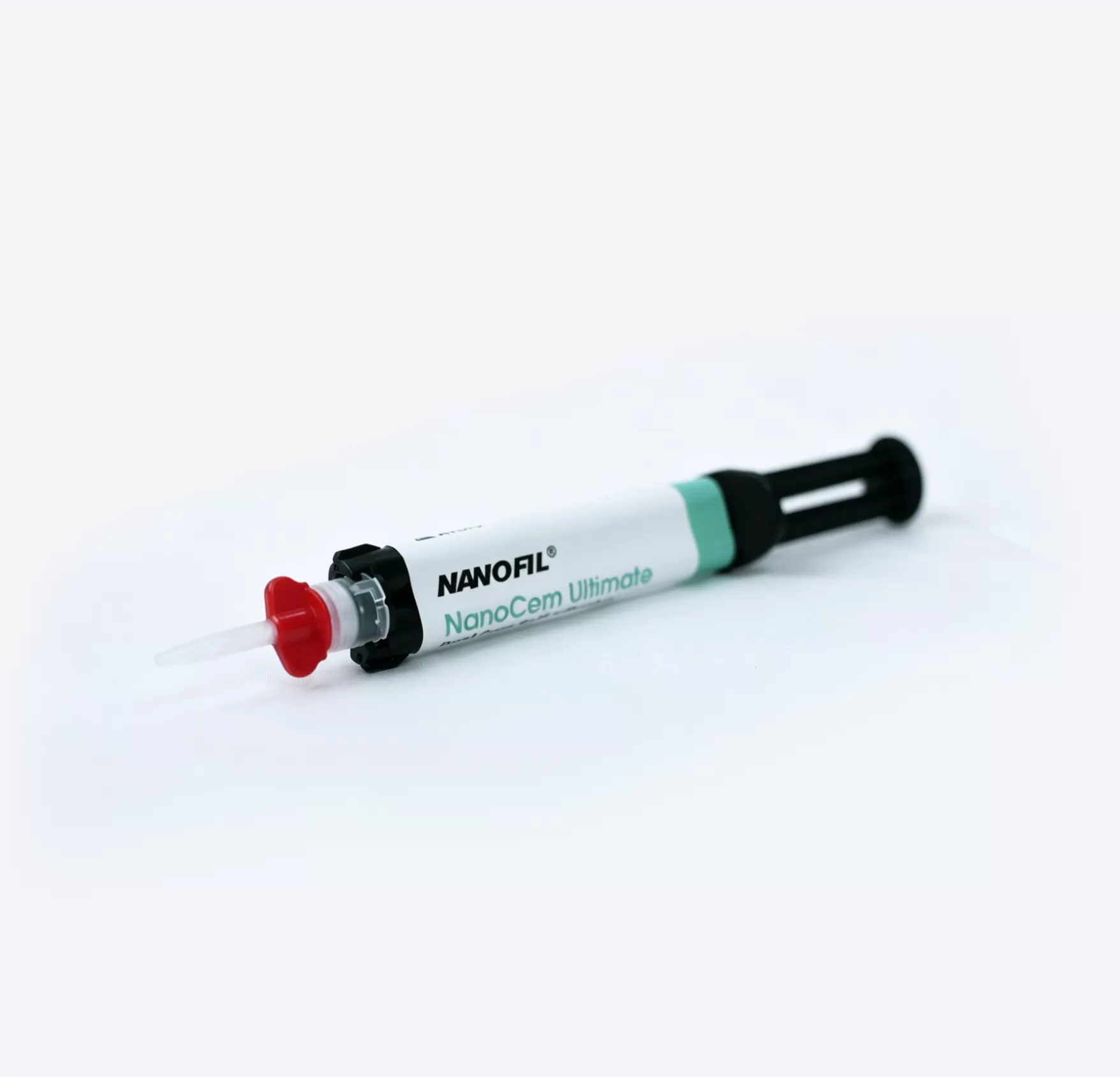
ATBIO's public OEM information covers restorative-material categories including composites, adhesives, cements and impression materials. That public scope is a starting point, not proof that every formulation, presentation or private-label configuration is available or authorized in your market. Request product-specific confirmation before building a launch plan.
For compatible portfolio planning, avoid assuming that a composite, adhesive, etchant and cement are interchangeable with any other system. Review each current IFU and train sales teams not to create off-label compatibility claims.
04 — Build a Product and Market Requirements Brief
A useful request for quotation is detailed enough to expose gaps before sampling. Include:
Market: countries, regulator, expected legal roles, registration route and required languages.
Product: exact category, intended use, users, variants, shades, presentation and proposed claims.
Evidence: declarations, certificates, testing, biocompatibility or clinical evidence, risk documents and stability information required for the route.
Packaging: primary container, kit contents, secondary pack, transport pack, coding, UDI or local identifiers and environmental needs.
Commercial plan: forecast by SKU, first-order quantity, reorder pattern, target launch window and destination.
Service: sample needs, artwork support, training, complaint handling, change notification and continuity expectations.
Separate mandatory requirements from preferences. This lets the manufacturer quote an available platform without silently treating a desired feature as an approved product claim.
05 — Qualify the Manufacturer and the Exact Platform
Private-label qualification asks a narrower question than general supplier selection: can this manufacturer control the exact platform that will carry your brand, including formulation, intended purpose, label, pack, site and change history? Use the supplier scorecard for comparison and the factory audit checklist for deep evidence.
The private-label hard gate is role clarity and change control. No artwork should be approved until the parties have documented the legal manufacturer, brand owner, importer or representative where applicable, claims owner, complaint route and prior-notification rules for regulated changes. A logo change cannot cure an inconsistent technical file.
06 — Control Samples and Approval Status
Label each sample as prototype, engineering sample, pre-production sample or saleable batch, with product version and lot traceability. Define the evaluation questions in advance and use qualified evaluators following the supplied instructions. A sample's attractive handling does not establish shelf life, production consistency or market authorization.
Compare the sample with an approved written specification, not memory.
Record evaluator, date, lot, conditions, equipment and deviations.
Route formula, shade, viscosity, delivery or packaging requests through documented change control.
Use the documented change assessment to determine all required verification, validation, stability and regulatory activities; do not assume a packaging-only change has no effect on the product.
Freeze the approved product and packaging version before registration and production.
If a pilot involves clinical use, confirm that the product and activity are lawful and ethically appropriate in that market. Do not describe informal distributor feedback as a clinical trial.
07 — Treat Artwork and Translation as Controlled Documents
Packaging must connect brand design with regulated content. Create a master text approved by the responsible regulatory and quality roles, then build language versions through qualified translation and review. Control product name, intended purpose, warnings, symbols, quantities, storage, expiry, lot coding, economic-operator details and identifiers.
Maintain an artwork register showing language, market, product code, revision, approval date and effective production lot. Require a line-clearance and reconciliation process at the printer and packer so an obsolete carton or IFU cannot enter the wrong batch. Marketing websites, catalogues and distributor training should use the same approved claim set as the physical product.
08 — Quote MOQ and Timeline From Real Constraints
There is no reliable universal MOQ or private-label launch time. The constraint may be product batch size, primary container, printed carton, multilingual IFU, label roll, mixing tip, registration review or transport. Ask for a component-level quotation instead of one headline number.
| Planning item | Confirm in writing | Decision risk |
|---|---|---|
| MOQ | Minimum by product, shade, language, carton, label and total order | A low product MOQ hidden by a higher printed-pack MOQ |
| One-time cost | Design, translation, testing, legalization, tooling and plates | Unclear ownership or repeat charges |
| Lead time | Clock start, dependencies, approval gates, production and dispatch point | “Production time” that excludes artwork or materials |
| Shelf life | Supported shelf life and minimum remaining life at dispatch or receipt | Registration or transit consumes saleable life |
Build the schedule backward from lawful launch, allowing time for regulatory review, artwork corrections, material procurement, production, batch testing, release, transport and customs. Production should not be confused with permission to place stock on the market.
09 — Sign a Quality Agreement Alongside the Commercial Contract
The commercial contract sets price, forecast, payment, territory and intellectual-property terms. A quality agreement should allocate document control, specifications, supplier qualification, batch release, deviations, change notification, complaint exchange, regulatory reporting, field action, recall, audit access, record retention and business continuity.
Set measurable notice and response times appropriate to the product and market. Define who decides whether stock affected by a deviation or transport excursion may be released. Address ownership and transfer of artwork, registrations and technical access at termination. No sales target or exclusivity clause should override safety or regulatory duties.
10 — Launch With Traceability and Reorder Controls
Before the first sale, train customer-facing and quality staff on the approved indication, IFU, storage, claims and complaint escalation. Link the brand SKU and artwork revision to the manufacturer's lot, release documentation, quantities received and customers supplied. Test whether a selected lot can be located and reconciled, not merely whether recall contacts exist. Assign responsibility for quarantine, customer notification, incident assessment, required reporting and corrective-action follow-up; a commercial replacement does not discharge these duties.
Monitor paid sell-through, reorder interval, complaint trends, returns, expiry exposure, fill rate and forecast accuracy. A strong brand launch is not the first large shipment; it is repeatable supply of the correct, compliant version with controlled support.
11 — How to Discuss an ATBIO Private-Label Project
ATBIO's official company profile describes private-label manufacturing for dental restorative materials, including composites, adhesives, cements and impression materials, with support from product development through packaging and regulatory work. Availability and scope must still be confirmed for the exact product, market and requested changes.
Prepare a short brief covering destination market, legal-role proposal, product family, variants, languages, packaging, forecast, document list and target launch window. Submit it through request a quote. If the project also includes local distribution of the ATBIO brand, review the separate distributor partnership route.
12 — Frequently Asked Questions
Is private labelling only a packaging change?
No. Even when the underlying product is unchanged, own-name marketing and label changes can affect regulatory roles, registrations, quality controls and post-market duties. Determine the consequences before approving artwork.
Can an existing CE-marked product simply carry my brand?
Not automatically. The EU MDR assigns manufacturer obligations in some own-name situations and provides a specific exception where its conditions are met. Obtain qualified advice and verify the exact agreement, label and device documentation.
What is the minimum order for private label dental supplies?
It depends on product batch, shade or variant, container, printed materials, language and customization. Ask for each limiting MOQ and for the total first-order commitment. Do not plan from an uncited industry average.
Who owns the product registration?
The answer depends on the jurisdiction and agreed roles. State the holder, maintenance duties, data access, costs, change approvals and transfer or cancellation rights explicitly in the contracts.
Should registration start before samples are approved?
Preliminary gap assessment can start early, but filing an unstable product or artwork version creates rework and risk. Use documented design and regulatory gates to determine when the configuration is sufficiently frozen for submission.
13 — References
European Union. Regulation (EU) 2017/745 on medical devices, Article 16: cases in which manufacturer obligations apply to other operators. https://eur-lex.europa.eu/eli/reg/2017/745/oj.
Medical Device Coordination Group. MDCG 2021-26: Questions and Answers on repackaging and relabelling activities under Article 16 of Regulations (EU) 2017/745 and 2017/746. October 2021. https://health.ec.europa.eu/system/files/2021-10/md_mdcg_2021_26_en_0.pdf.
International Organization for Standardization. ISO 13485:2016 — Medical devices — Quality management systems.
ATBIO. Company profile and private-label manufacturing scope.
14 — About the Manufacturer
This article is published by ATBIO, the dental-materials brand of AT&M Biomaterials Co., Ltd.
ATBIO is the dental-materials brand of AT&M Biomaterials Co., Ltd. Its public portfolio includes composites, adhesives, cements, impression materials and related dental categories, and its company profile describes OEM and private-label services. Exact product availability, legal roles, claims, documentation, MOQ, pricing and timeline require project-specific written confirmation. This page does not claim unconditional sale authorization in every country.
This article is general business and regulatory information, not legal, regulatory or clinical advice. Requirements vary by product, activity and jurisdiction. Consult qualified professionals and the competent authority before branding, registering, importing or selling a device.
15 — Related Products and Resources
Do you prefer online learning?
Live webinars and professional tips — learn when, where and how.
Access our online learning opportunities