Teeth Filling Types | Material Comparison | ATBIO
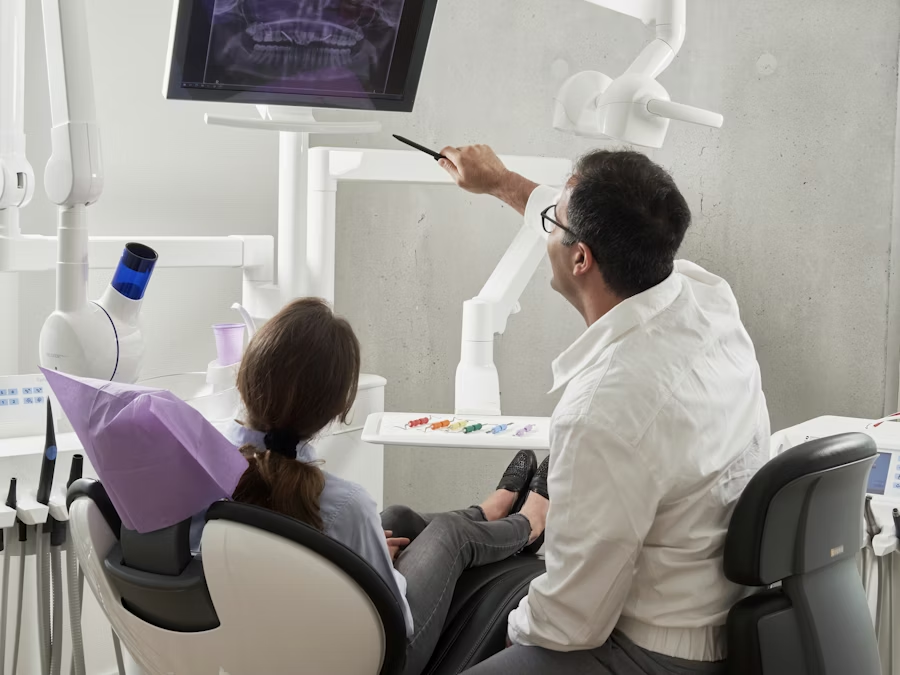
When a tooth requires a restoration, the material choice influences how much sound tooth tissue is preserved, how the result looks, how durable it is, and how the clinical workflow is managed. Patients usually ask what types of fillings exist, while clinics and distributors focus on which material best fits each indication and care setting.
01 — Principal filling materials in modern practice
This guide covers the six principal categories used in daily restorative treatment: amalgam, composite resin, glass ionomer cement, resin-modified glass ionomer, indirect ceramics, and gold. Each section below preserves its key performance profile, practical strengths, and case positioning.
02 — Amalgam
Dental amalgam is an alloy of silver, tin, copper, and approximately 50% elemental mercury. It has a long clinical history and remains a durable option in specific settings.
Characteristics
It shows high compressive strength, strong wear resistance, and a placement method that tolerates less ideal moisture control than many adhesives. Classically it has relied on mechanical retention, often requiring cavity designs with undercuts.
Pros
High durability in load-bearing posterior restorations.
Streamlined material handling and dependable bulk placement.
Lower sensitivity to isolation compared with many adhesive approaches.
Cons
Metallic appearance with potential darkening over time.
No direct chemical bonding, so more extensive tooth preparation is typically needed for retention.
Contains mercury and is part of the global phase-down trend under the Minamata Convention.
Typical use
Large posterior restorations and selected public-health or system-level environments where amalgam remains practical. The global shift toward adhesive and aesthetic materials is reducing, but not erasing, this use case.
For a clinical contrast between amalgam and composite principles, review /blog/minamata-phase-down-distributors-guide.
03 — Composite resin
Composite resin uses a resin matrix with glass or silica fillers. Modern nanohybrid systems bond to enamel and dentin, allowing conservative cavity design, strong aesthetics, and versatile viscosities.
Pros
Tooth-matched appearance across anterior and posterior zones.
Adhesive bond creates immediate margin sealing and can support remaining tooth structure.
Repairable in many cases, avoiding full replacement.
Mercury-free and broad selection by viscosity for workflow flexibility.
Cons
Technique-sensitive placement requiring isolation, conditioning, bonding protocol, and controlled incremental layering.
Longer chairside sequence than amalgam.
Outcome quality is closely linked to protocol quality.
Typical use
Default direct restorative material for most anterior and posterior indications when moisture control is adequate and tooth preservation is a priority.
Explore the broader composite portfolio at /dental-composite-resins/.
04 — Glass ionomer cement
Glass ionomer cement is formed through acid-base chemistry between fluoroaluminosilicate glass and polyalkenoic acid. It adheres chemically and releases fluoride over time, supporting remineralization support around restorations.
Pros
Chemical adhesion to moist tooth structure with minimal separate bonding steps.
Fluoride release and biocompatibility profile.
Lower protocol sensitivity in some clinical conditions.
Cons
Lower fracture toughness and wear resistance versus amalgam and composite.
Aesthetic quality is acceptable but less than composite options.
Requires moisture protection during early maturation.
Typical use
Paediatric restorative needs.
Root-surface and Class V lesions.
High-caries-risk cases.
Minimally invasive and ART workflows.
Temporary and permanent base/liner functions.
For compositional and performance comparison, see /blog/glass-ionomer-vs-composite.
05 — Resin-modified glass ionomer
Resin-modified glass ionomer combines conventional GIC acid-base chemistry with a resin phase that light-cures. This hybrid approach improves handling and early strength while retaining fluoride release.
Pros
Meaningful fluoride release with improved early seal behavior.
Better initial strength and polishing than conventional GIC.
Earlier command set and improved handling comfort.
Cons
Still below composite in aesthetic and wear performance for high-load restorations.
Includes a resin component and therefore some polymerization shrinkage consideration.
Higher material and process commitment than conventional GIC.
Typical use
Class V restorations.
Liner or base under composite.
High-caries-risk and paediatric cases where extra strength above GIC is desired.
06 — Indirect ceramic inlays and onlays
These are indirect restorations, usually milled or lab fabricated, bonded with resin cements. Materials include feldspathic glass ceramics, leucite-reinforced ceramics, and lithium disilicate systems.
Pros
Excellent, stable aesthetics.
High wear stability and excellent opposing enamel compatibility.
No polymerization shrinkage within the restoration itself.
Strong case performance for larger defects.
Cons
Higher resource and workflow intensity, often with additional appointments or equipment requirements.
Requires digital impressions or lab workflow and adhesive bonding control.
Not directly repairable in many fracture scenarios.
Often higher initial investment in preparation complexity.
Typical use
Large posterior defects and demanding restorative cases where patients value long-term restoration quality and visual outcome.
07 — Gold restorations
Cast gold restorations remain a legacy benchmark for longevity and tissue compatibility.
Pros
Very high service life and stable marginal adaptation.
Excellent biocompatibility.
Gentle wear pattern against opposing teeth.
Cons
Higher process complexity and laboratory dependence.
Visible metal appearance and low aesthetic preference.
Narrowed clinician and lab skill base over time.
Typical use
Now mainly niche or selected legacy indications when durability is the decisive driver and aesthetics is secondary.
08 — Comparison framework
| Material | Aesthetics | Strength and wear | Adhesion | Fluoride release | Technique demand | Procurement and workflow | Typical use |
|---|---|---|---|---|---|---|---|
| Amalgam | Poor, metallic and prone to darkening | Very high | Mechanical retention | No | Low | Simple chairside sequence, compact inventory, lower upstream complexity | Large posterior, selective health-system use |
| Composite resin | Excellent | High | Adhesive system required | No | Moderate to high | Multi-material workflow, longer procedure time, broad case coverage | Most direct restorations |
| Glass ionomer cement | Fair | Moderate | Chemical, self-adhesive | Yes | Low | Compact material profile and straightforward hand-mixed workflow | Paediatric, Class V, ART, liner/base role |
| Resin-modified GIC | Good | Moderate plus | Chemical plus light-cured resin | Yes | Low to moderate | Mid-level inventory mix, adaptable in paediatric and high-risk care | Class V, liner/base, high-risk and selective paediatric care |
| Ceramic inlay/onlay | Excellent | Very high, brittle fracture risk | Resin cement adhesion | No | High | High laboratory dependence and case planning intensity | Large posterior defects, demanding aesthetic outcomes |
| Gold | Poor in visible zones | Exceptional service life profile | Cemented indirect fit | No | High | Selective legacy and niche demand | Cases prioritizing proven longevity when aesthetics is secondary |
09 — Procurement and workflow considerations
Procurement requirements vary across countries and case complexity, so this section focuses on material-system and workflow implications.
Amalgam and conventional GIC are often associated with simpler material inventories and faster direct placement pathways.
Composite delivery often requires a system approach: composite, etchant, adhesive, and supporting consumables, increasing coordination and training demands.
RMGI sits between GIC and composite in process breadth.
Indirect ceramic and gold are higher in workflow intensity due to lab coordination, bonding protocols, and visit cadence.
For distributor planning, material strategy is an end-to-end clinical and inventory design decision rather than a single-SKU choice. Composite programs especially benefit from segmented consumption planning, for example using flowable composites for smaller defects and GIC-based options for indicated moisture-tolerant or paediatric applications while reserving advanced systems for high-demand cases.
For strategic distribution guidance on phase-down transitions, see /blog/minamata-phase-down-distributors-guide.
10 — Selecting by case and clinical priorities
Small to medium lesions with expected aesthetics: composite resin is generally the default in most modern systems.
Deep cavities needing a base: GIC or RMGI as liner/base, with composite as restorative cover.
Paediatric and high-caries-risk cases: GIC or RMGI for fluoride function and moisture-compatible chemistry.
Field constraints or minimally invasive community protocols: GIC, including conservative techniques.
Large posterior defects with demanding outcome goals: ceramic inlay or onlay when the available infrastructure supports the workflow.
Very large restorations where adhesive control is not feasible: amalgam remains a pragmatic fallback in some systems.
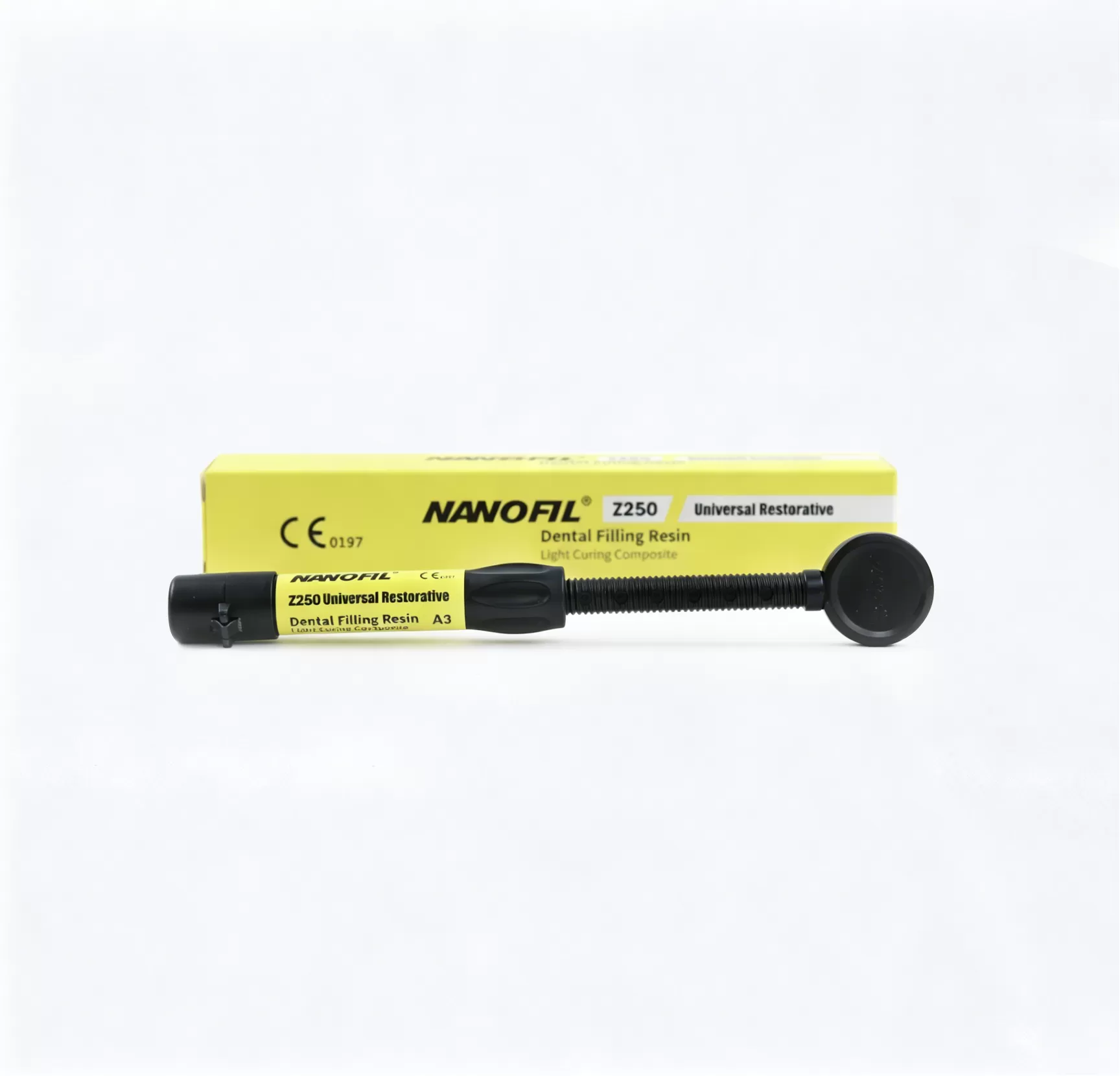
At a portfolio level, the current market trend supports adhesive, tooth-preserving, tooth-coloured systems as the broadest coverage category, with substantial demand for composite and GIC segments. A proven universal composite base, such as NANOFIL® Z250, supports everyday restorative needs across many case types when coupled with reliable bonding and surface preparation materials.
11 — FAQ
1. What is the most common direct filling material today?
Composite resin is the dominant direct material in many modern practices due to aesthetics, adhesive placement, and ongoing phase-down pressures.
2. Which filling material has the longest service life?
Cast gold and ceramic restorations generally offer long service life potential, while well-placed amalgam and composite can both perform well over medium to long timeframes when cases are properly selected.
3. Are white fillings as strong as silver fillings?
Modern nanohybrid composites provide adequate strength for indicated posterior applications and are often comparable in clinical survival to amalgam when bonded and cured correctly.
4. Which filling is best for children?
Glass ionomer or RMGI is often preferred for primary teeth and high-caries-risk children because of fluoride release and chemical adherence under less ideal isolation. Composite remains important where longevity and aesthetics are required in longer-term cases.
5. How should a restorative workflow be standardized?
Align procurement to protocol complexity. A composite-led system requires consistent training, bonding discipline, and ancillary consumables, while GIC and RMGI support simpler handling in selected indications.
6. Should clinicians use indirect restorations for all large posterior defects?
No. Case size, occlusal loading, aesthetics expectations, and available infrastructure should drive whether direct composite, ceramic indirect, or another option is preferred.
12 — References
13 — About ATBIO
ATBIO is a global restorative materials provider serving clinics and distribution channels across 100+ countries. Our operations are built on CE-certified quality systems and EN ISO 13485-compliant quality management, supported by broad product families including NANOFIL®, NANOFIL Nova®, GK®, and ONELUX®.
Our restorative lines include composite systems, glass ionomer and restorative cements, and related support materials for daily clinical workflows.
14 — Related products
Explore the full composite and cement ecosystems at /dental-composite-resins/ and /cements/.
Atbio’s restorative planning support is designed for teams balancing clinical outcome, workflow resilience, and procurement continuity. Review your target case mix and request a consolidated proposal for a full restorative portfolio through Request a quote, or connect via our distribution channel at Contact a distributor.
This page does not claim unconditional sale authorization in every country.
Do you prefer online learning?
Live webinars and professional tips — learn when, where and how.
Access our online learning opportunities