Composite Shade Selection: A Repeatable Workflow | ATBIO
Composite shade selection works best as a repeatable observation process. When the initial match and the finished restoration differ, review when and how the shade was chosen before concluding that the shade label was wrong.
1. Record shade before isolation changes the view
Tooth hydration affects apparent color. An in vivo investigation of dehydration documented color changes during drying. It does not provide one universal recovery interval for every patient or procedure. Select and record the starting shade before prolonged isolation, consistent with the material instructions, and avoid repeatedly drying the tooth simply to improve visibility during shade comparison. Source 1.
A randomized trial found that dehydration lightened teeth and that baseline shade had not returned within 30 minutes of rehydration under its study conditions. Burki et al., 2013
For training, keep the initial shade record before isolation. The study does not establish a universal rehydration waiting time.
Use a consistent viewing environment. Strongly colored surroundings and inconsistent illumination make repeat assessments harder to interpret. A photograph is useful documentation, but camera exposure and white balance can change its appearance; it should not silently replace the clinical observation.
2. Keep a short shade record
| Record field | Why it helps |
|---|---|
| Tooth and restoration area | Cervical, body and incisal regions may need different consideration |
| Hydration and isolation stage | Explains a changing appearance during treatment |
| Light and photograph settings | Makes later comparisons more reproducible |
| Material, shade and opacity | Prevents treating a shade name as a complete specification |
| Cured sample and final finish | Separates shade selection from paste appearance |
3. Use the actual restorative material when appropriate
A shade tab is a starting reference. Where the manufacturer's instructions and clinical situation allow, an appropriately made cured material sample can help assess the selected product. Follow the applicable curing and removal procedure; do not leave an informal trial attached or create an unsupported bonding step.
Evaluate shade and opacity separately. A nominally correct shade may still show too much background or insufficient translucency. Finish the evaluation surface consistently because different surface textures make a visual comparison less reliable.
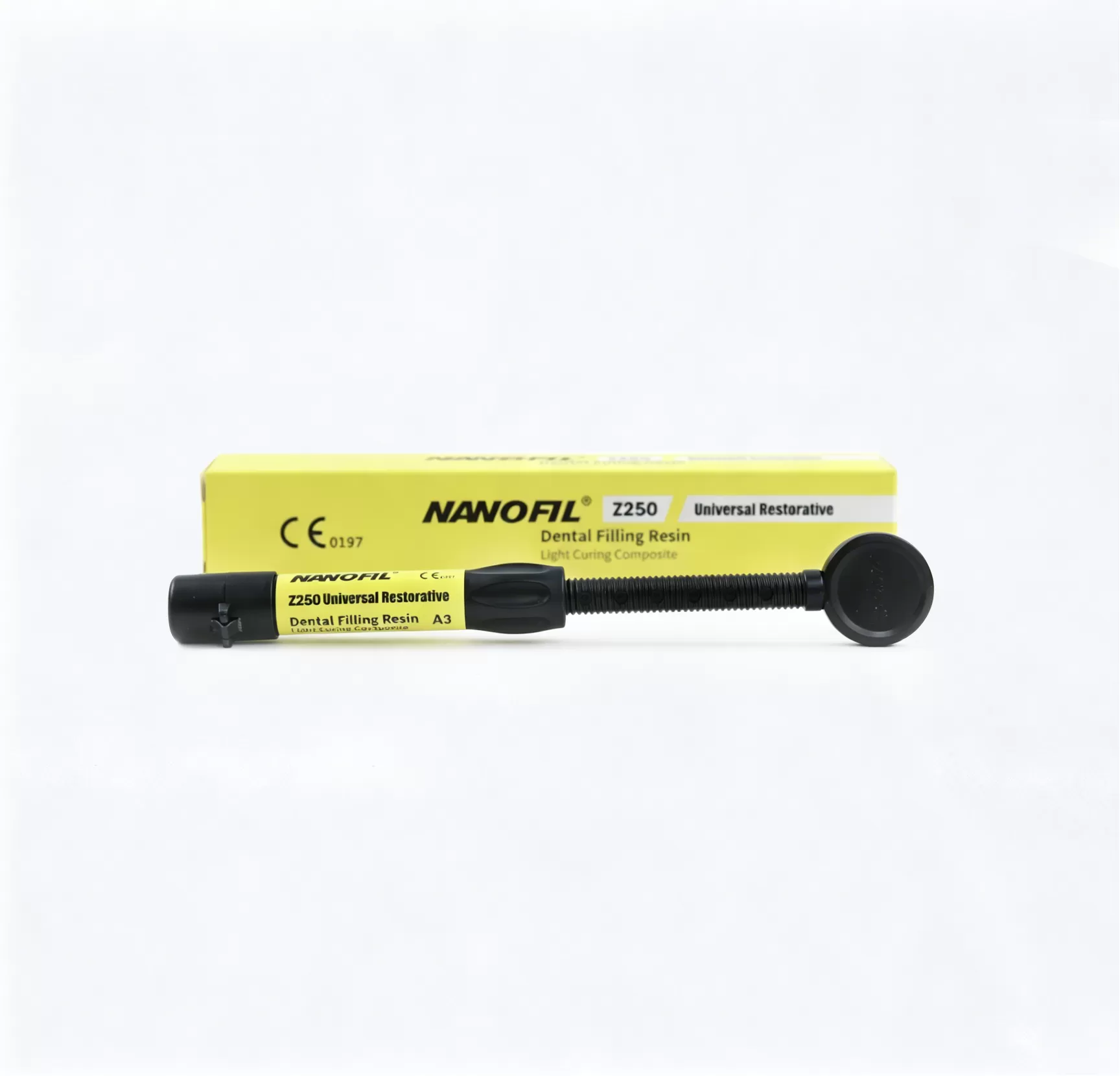
For purchasing, maintain a product-specific shade list rather than assuming that every A2 from every range is interchangeable. Ask ATBIO for the available Z250, Universal Aesthetic or NOVA shades and their current documentation. Include the existing material you want to compare and the clinical application.
4. Build a shade demonstration that distributors can repeat
A shade name identifies a position within a manufacturer's system; the finished appearance also depends on opacity, thickness and the surface being viewed. For a useful demonstration kit, label each cured specimen with the product, shade, thickness and preparation date. Use the same background and finishing method across comparable specimens. Keep the natural tooth observation and the model demonstration as separate records: a model helps explain a material, while clinical selection concerns the individual tooth.
The NANOFIL restorative-composite V2601 instructions place shade selection before isolation. This gives a distributor's training card a concrete sequence: initial shade record, material selection, isolation, restoration and final assessment. It also gives the sales team a better answer than recommending a different shade whenever a photograph looks lighter.
5. A practical record for customer training
| Entry | Example of a completed training record |
|---|---|
| Purpose | Demonstrate the customer's routine anterior shade selection |
| Specimen identity | Product and A2 label; actual thickness recorded beside the specimen |
| Viewing conditions | Same lamp, background and camera settings for every comparison |
| Decision | Include the requested shade and opacity in the sample assortment |
This is an illustrative record, not a reported clinical result. When requesting samples, specify the shade codes currently purchased and the applications driving demand. ATBIO can then address the relevant assortment, rather than treating a visual question as a request for every available shade.
Product information for distributors and OEM projects
Use the record above to define your application, product and sample requirements. Request ATBIO product information with your company, destination market, preferred presentation and estimated quantity. Include whether you require ATBIO-branded supply or an OEM project.
Related material selection guide
Frequently asked questions
When should I select the starting shade?
Before prolonged isolation or drying changes the tooth appearance, following the clinical workflow and instructions.
Is one photograph enough to approve a shade?
No. It records a view under particular settings and should be interpreted alongside clinical observations.
Does the same shade name guarantee the same result?
No. Record the manufacturer, product and opacity as well as the shade designation.
What should a distributor request for a shade evaluation?
The current shade list, exact sample identifiers and a consistent evaluation record for participating clinicians.
References and product information
External sources support the specific discussion above; they are not tests of ATBIO products. Product pages identify the relevant range. Obtain the current instructions for the exact model before use.
/dental-composite-resins/nanofil-z250-universal-restorative-composite
/dental-composite-resins/nanofil-universal-aesthetic-dental-resin
/dental-composite-resins/nanofil-nova-light-cured-universal-composite-resin
Additional product documentation
About the manufacturer
ATBIO is the dental-material brand of AT&M Biomaterials. Explore NANOFIL Z250, NANOFIL Universal Aesthetic, NANOFIL NOVA Universal. Product selection, compatibility and supply documentation should be confirmed for the exact model and destination.
Do you prefer online learning?
Live webinars and professional tips — learn when, where and how.
Access our online learning opportunities